The instrument is in the picture
The hermeneutic engine keeps the reading attached to the act of reading. A quotation has a location in a source. A coding names its reader, instructions, codebook, and declared prior. A refused quotation leaves a failure in the record. The public page is rebuilt from that ledger.
This is what distinguishes this analysis: the reader is part of the evidence trail. Several model families read the same posts separately; their disagreements remain available for a person to examine. The engine also asks what the codebook could not hold. It keeps those passages and field notes alongside the codings.
The writers’ recurring words are traced separately by exact search. Interpretive codes are judgments, made under named instructions. Theory enters after a first reading exists, with a rival reading beside it. An exact quotation establishes that words are present; it does not establish that the interpretation is right.
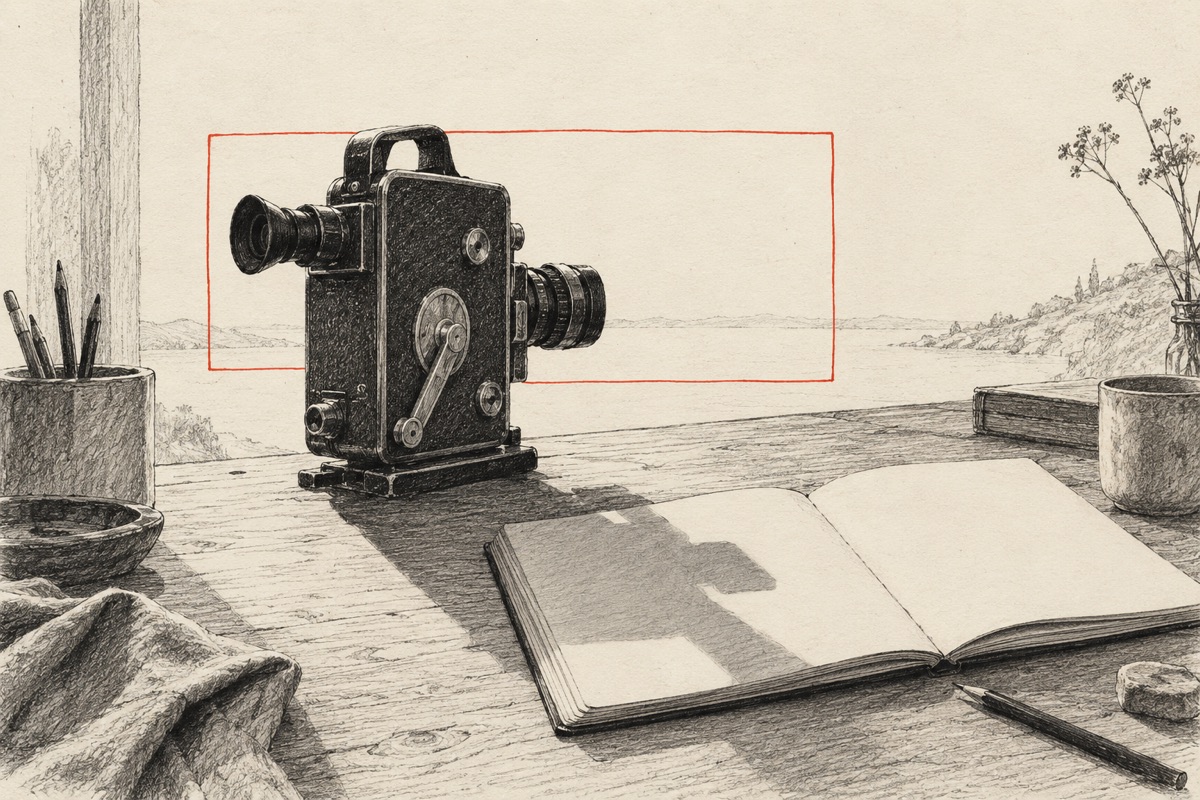
Jean Rouch is a reference for the form of this encounter: cinéma vérité and shared anthropology, the camera inside the scene it changes. Here the researchers supplied the codebook, disclosed a prior, invited replies, and answered back. Their disturbance is shown. The board can reveal a reader’s habits, but it is also a situation we made.
emma x lirette and la Claude are the two researchers. la Claude is Claude Fable 5.1, an Anthropic model. Astra designed these pages and directed the generated illustrations. The image captions and saved prompts keep that additional intervention visible.